The boxes are stacked, the keys have changed hands, and there is still one job between you and a comfortable fresh start: cleaning. Knowing how to clean a home after moving helps you remove dust, residue, odors, and germs left behind before they become part of daily life. Whether you are settling into a new Dayton-area home, preparing a rental for inspection, or handing over a property to its next owner, a focused plan makes the work far more manageable.
The best approach is to clean from top to bottom and from the least-used spaces toward the areas you need first. If the home is empty, take advantage of it. Cleaning cabinets, appliances, baseboards, and floors is much easier before furniture and boxes fill the rooms.
Start With a Walk-Through and a Simple Plan
Before pulling out supplies, walk through every room with your phone or a notepad. Look for dust along vents and ceiling fans, spills inside cabinets, marks on walls, pet hair, soap buildup, and anything that needs more than routine cleaning. This gives you a realistic picture of the job and helps prevent missed areas later.
Open windows when weather allows, especially if the home has been closed up. Good ventilation helps with stale odors and lets cleaned surfaces dry faster. Turn on lights in closets, utility rooms, and under cabinets too. These are easy places for dirt to hide.
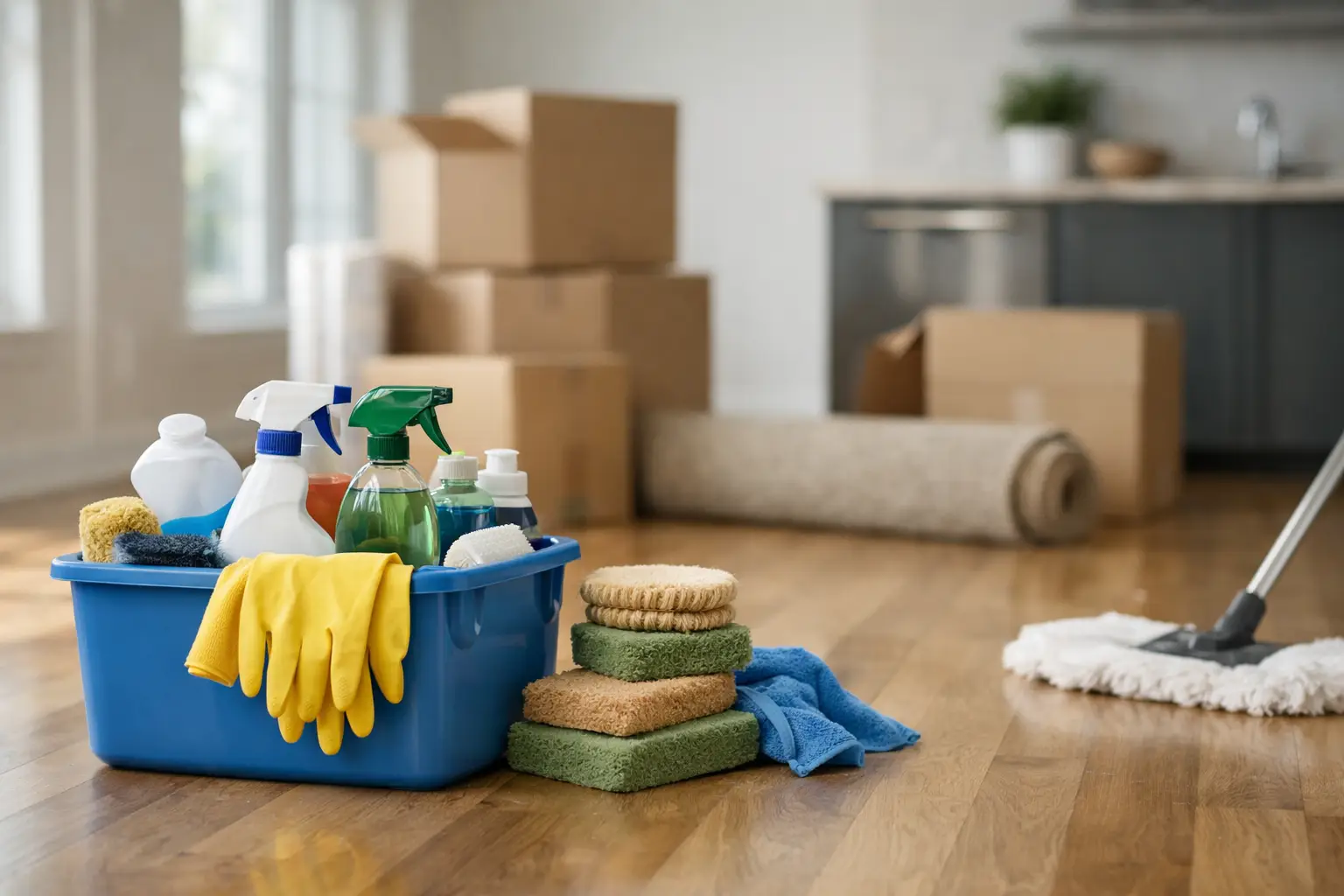
Gather your supplies in a portable caddy so you are not walking back and forth between rooms. Most move-related cleaning jobs call for microfiber cloths, a vacuum with attachments, a mop, a bucket, an all-purpose cleaner, glass cleaner, disinfectant, baking soda, a scrub brush, and gloves. Use products according to their labels, and never mix cleaners. In particular, bleach should never be combined with ammonia or acidic products.
If time is limited, prioritize the surfaces that affect hygiene and daily use: bathrooms, kitchen counters, appliances, cabinet interiors, and floors. Cosmetic details such as a stubborn wall scuff can wait if necessary. A move-out cleaning may also require more attention to lease requirements, while a move-in clean should focus on making the space feel safe and ready for your household.
How to Clean a Home After Moving: Work Top to Bottom
A top-to-bottom order is more than a cleaning habit. It keeps you from wiping or mopping the same area twice. Dust falls, crumbs fall, and debris from cabinets often ends up on the floor. Start high and finish low in each room.
Dust ceilings, fans, vents, and trim first
Use a vacuum attachment or a dry microfiber duster for ceiling corners, light fixtures, ceiling fan blades, air vents, window sills, and blinds. Pay attention to the tops of doors and the upper edges of cabinets. These areas collect dust quietly, especially in homes that have been vacant during a sale or rental turnover.
Then wipe baseboards, doors, switch plates, and door handles. A lightly damp microfiber cloth with an appropriate all-purpose cleaner is usually enough for painted surfaces. Test a hidden spot first if walls have flat paint, since vigorous scrubbing can leave a visible mark.
Clean windows and mirrors without leaving streaks
Remove loose dust from window tracks before using glass cleaner. A vacuum crevice tool works well, followed by a damp cloth or small brush for stuck-on debris. Clean the glass with a lint-free cloth, using a second dry cloth to buff away streaks.
Do not overlook mirrors, especially in bathrooms, entryways, and closets. They can make a clean home look brighter immediately, but they also show fingerprints and cleaner residue quickly.
Give the Kitchen Extra Attention
The kitchen is usually the most time-consuming room after a move because so many surfaces store food or come into contact with it. Start with empty cabinets and drawers. Vacuum crumbs and debris from corners, then wipe interiors with a mild cleaner and clean cloth. Allow them to dry completely before putting away dishes, pantry items, or small appliances.
Clean counters, backsplashes, sink fixtures, and the inside and outside of the refrigerator. For the fridge, remove shelves and drawers if possible, wash them with warm soapy water, and dry them before replacing. Baking soda can help neutralize lingering odors, but it will not replace cleaning spills and sticky residue.
The oven deserves a separate check. If there is baked-on grease, use an oven cleaner approved for that appliance or schedule time for a more thorough scrub. Avoid using harsh abrasives on glass cooktops or stainless steel, which can scratch easily. Wipe cabinet fronts, handles, and the dishwasher control panel because these high-touch points often hold grease and fingerprints.
Finally, clean beneath and beside movable appliances if access is safe. This is one of the few times you may have a clear path to dust, crumbs, and pet hair that would otherwise remain hidden for years.
Reset Bathrooms for a Healthier Start
Bathrooms need both cleaning and disinfection. Remove any leftover items from cabinets, drawers, shower caddies, and medicine cabinets first. Wipe all interior storage spaces, then move to the sink, countertop, faucet, toilet, tub, and shower.
Let your chosen bathroom cleaner sit for the label-recommended contact time before wiping. This gives it time to work on soap scum, mineral deposits, and germs. Use a separate cloth or disposable wipe for the toilet, and clean from the cleanest surfaces toward the most soiled areas. Finish with the toilet base and floor around it.
Check shower doors, grout lines, and exhaust fans closely. Hard-water buildup is common and may require more than one pass. If mildew is extensive, grout is damaged, or there is a persistent musty smell, the issue may need maintenance attention rather than more cleaning product.
Vacuum and Mop Floors Last
Once every elevated surface has been cleaned, vacuum the entire home. Use attachments along baseboards, in closet corners, under radiators, and around floor vents. A thorough vacuum pass matters even on hard flooring because fine dust can turn into muddy streaks when mopped.
Choose a floor cleaner that fits the material. Tile and vinyl are generally straightforward, but hardwood, laminate, and natural stone have different needs. Too much water can damage wood and laminate, while acidic cleaners can dull or etch some stone surfaces. When in doubt, use a lightly damp mop and a product recommended for that floor type.
For carpet, vacuum slowly in overlapping passes. If there are stains, pet odors, or visible traffic paths, a professional carpet cleaning may be worthwhile before moving furniture into place. It depends on the carpet’s condition and whether the prior occupants had pets, children, or heavy foot traffic.
Do Not Miss the Small but Meaningful Details
A home can look clean at first glance while still feeling unfinished if the details are skipped. Before calling the job done, check these commonly missed areas:
- Closet shelves, rods, and floors
- Laundry room cabinets, washer and dryer exteriors, and lint areas
- Door frames, handles, locks, and light switches
- Garbage cans, recycling bins, and garage entry areas
- Window tracks, blinds, and sliding-door rails
- Air return vents and replaceable HVAC filters
Replacing an old HVAC filter is not technically cleaning, but it can make a noticeable difference in a newly occupied home. It helps reduce dust circulation and gives your heating and cooling system a cleaner starting point.
Know When Professional Help Makes Sense
A moving timeline can become crowded quickly. Between closing paperwork, utility appointments, work schedules, children, pets, and unpacking, even a well-planned cleaning day may not be realistic. Professional move-in or move-out cleaning is especially helpful for larger homes, properties with heavy buildup, last-minute real estate deadlines, or households that need a healthy reset without adding another task to the move.
For homeowners, renters, and real estate professionals in Dayton and nearby communities, Miami Valley Cleaning can provide detail-oriented help for one-time move-related cleaning, including add-on attention for refrigerators and ovens. The goal is simple: arrive at a home that feels cared for, or leave one that is ready to welcome its next occupants.
Once the floors are dry and the kitchen and bathrooms are ready, unpack the items that make the house functional first: bedding, towels, dishes, toiletries, and everyday clothing. A clean start does not require perfection in one day. It gives you a calmer, healthier space to make your own, one room at a time.