When a small office starts to feel dusty, cluttered, or stale, people notice fast. Clients notice it when they walk in, employees feel it by midweek, and managers usually end up carrying the stress of fixing it. This small office cleaning guide is built for busy teams that want a workspace that looks professional, feels healthier, and stays manageable without constant scrambling.
A small office has its own cleaning challenges. There is usually no full-time facility staff, no huge storage room for supplies, and no extra time in the day for everyone to stop and clean thoroughly. At the same time, small offices often share desks, break areas, restrooms, conference spaces, and entry points, which means mess spreads quickly. The goal is not perfection every hour. The goal is a realistic system that keeps dirt, germs, odors, and visual clutter under control.
What a small office cleaning guide should actually solve
Most offices do not struggle because people do not care. They struggle because cleaning responsibilities are vague. One person empties the trash when it overflows, another wipes the counter only before a client visit, and nobody is quite sure who should handle the microwave that has seen better days.
A useful plan solves three things at once. It protects health by reducing touchpoint buildup, it protects appearance by keeping the office presentable, and it protects time by making cleaning predictable instead of reactive. That last part matters more than many teams realize. A little structure prevents the last-minute cleanup rush before meetings, interviews, or inspections.
Start with zones, not one giant to-do list
The easiest way to manage office cleaning is to break the space into zones. A small office usually includes an entrance, workstations, a break room, restrooms, shared equipment areas, and maybe a conference room or waiting area. Each zone gets dirty in a different way, so each one needs its own rhythm.
The entrance and waiting area shape first impressions. Smudged glass, dusty baseboards, tracked-in dirt, and full trash cans make a clean business look careless. These spaces often need frequent light attention, especially in wet Ohio weather when mud, salt, and debris come in on shoes.
Workstations are more personal, which means cleaning can get inconsistent. Keyboards, phones, chair arms, desktops, and drawer handles collect dust and germs even when the area looks neat. Break rooms tend to be the opposite. They look messy quickly because crumbs, spills, food odors, and sink buildup pile up fast. Restrooms need the most consistency because even a small lapse is obvious.
When you think in zones, it becomes much easier to match the right task to the right schedule.
Build a schedule that people can follow
A good small office cleaning guide includes daily, weekly, and monthly tasks. That does not mean every task needs to be done by your team. It means every task should have a cadence.
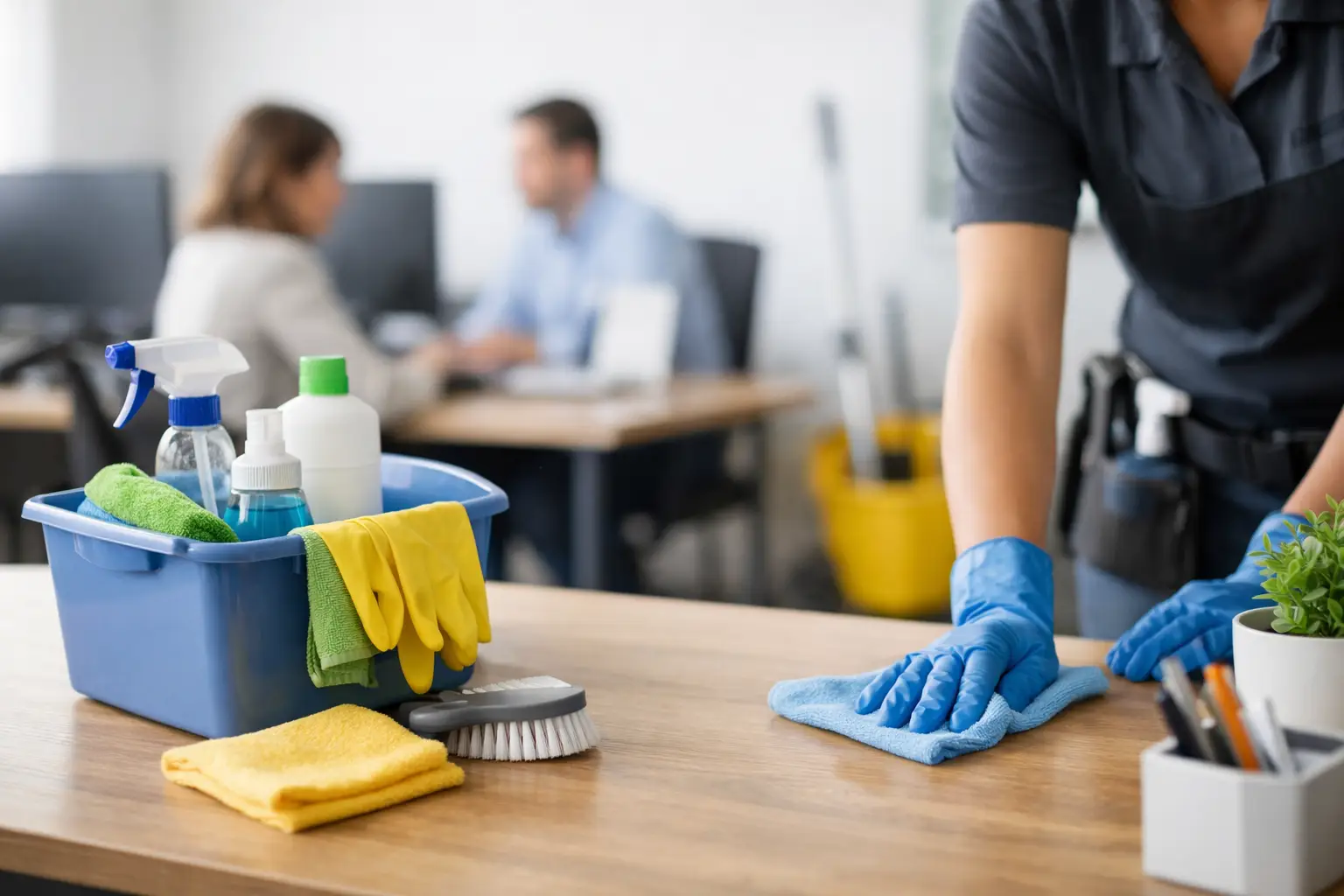
Daily cleaning should focus on visible mess and high-touch surfaces. Trash should be emptied as needed, counters wiped, restroom supplies checked, and shared surfaces sanitized. If your office has frequent visitors or a busy break room, daily attention is nonnegotiable.
Weekly cleaning should go deeper. This is when floors get more than a quick pass, glass gets detailed, desks are dusted properly, and restroom fixtures are cleaned thoroughly. It is also the right time to address areas that are easy to ignore during the rush of the workday, like light switches, door frames, and chair legs.
Monthly cleaning can cover vents, baseboards, lower walls, inside appliances, and other detail work that keeps the office from slowly drifting into a dingy look. If your office handles higher foot traffic, has shared food space, or serves clients in person, some monthly tasks may need to move to a weekly rotation. It depends on how the space is used, not just how large it is.
Focus on the surfaces that affect health and perception
Not every area needs the same amount of effort. If you want the biggest impact, start with what people touch and what people see.
High-touch points include door handles, faucet handles, light switches, appliance handles, shared keyboards, phones, table edges, and copier panels. These surfaces should be cleaned often because they collect bacteria and grime quickly, especially during cold and flu season.
High-visibility areas matter just as much. Floors near the entrance, mirrors, restroom sinks, break room counters, and conference tables shape how clean the whole office feels. People tend to judge cleanliness based on a few obvious cues. A spotless floor and fresh restroom can make the entire office feel cared for. A stained sink or sticky counter can do the opposite.
That is why cleaning for appearance and cleaning for hygiene should work together. One without the other leaves gaps.
Don’t let the break room become the problem area
In many small offices, the break room causes the most friction. It is shared by everyone, used throughout the day, and often nobody feels fully responsible for it. That makes it the easiest place for odors, spills, expired food, and sticky surfaces to build up.
The best fix is a combination of simple team expectations and routine deep cleaning. Employees should know the basics – wipe spills, toss food containers, rinse dishes, and avoid leaving the fridge packed with forgotten leftovers. But shared accountability only works if there is also a regular standard for deeper cleaning.
That means sanitizing counters, cleaning sink fixtures, wiping cabinet fronts, mopping the floor, and handling inside-the-fridge and microwave cleanup on a set schedule. If the break room is heavily used, professional attention makes a real difference because food-related mess tends to spread beyond what staff notice day to day.
Restrooms need consistency, not guesswork
A restroom does not have to be large to create a big problem. Low soap, empty paper products, unpleasant odors, and visible buildup send a strong message to employees and visitors. In a small office, even one neglected restroom can affect the whole workplace experience.
Clean restrooms depend on routine. Toilets, sinks, mirrors, dispensers, and floors should be checked and cleaned consistently. Touchpoints matter here too, especially faucet handles, flush handles, and door hardware. If your office has client traffic, restroom presentation becomes part of your professional image, whether you intend it to or not.
Supplies matter, but overbuying is not the answer
A lot of offices either understock supplies or buy too many products that do the same thing. A simpler setup usually works better. Most small offices need quality disinfectant, glass cleaner, restroom cleaner, microfiber cloths, mop supplies, trash liners, paper products, and hand soap. Floor care may vary depending on whether you have hard surfaces, carpet, or both.
The bigger issue is storage and access. If supplies are hard to find, people skip the task. If products are unlabeled or scattered, they get used incorrectly. Keep supplies organized and easy to reach, and make sure staff knows what is for disinfecting versus general wiping. That saves time and avoids the false sense that a surface is clean when it has only been tidied.
Know when in-house cleaning stops being efficient
Some small offices can manage light daily upkeep internally. That works best when the team is small, the layout is simple, and someone clearly owns the process. But there is a tipping point where in-house cleaning starts costing more than it saves.
If employees are cleaning instead of doing their actual jobs, standards usually slip. If cleaning tasks are causing tension, getting skipped, or only happening before important visits, the system is not really working. The same is true when details are consistently missed – corners, baseboards, restroom fixtures, glass, and floors often tell the story.
That is where professional service can help. A dependable cleaning partner brings consistency, proper products, and the kind of detailed routine that busy teams rarely have time to maintain on their own. For local businesses in the Dayton area, that support can be especially useful during seasonal weather shifts, higher sick-season concerns, or periods of growth when office traffic increases.
A clean office supports more than appearances
Cleaning is often treated like a background task until the office starts feeling off. Then people notice lower morale, more distraction, and that quiet stress that comes from working in a space that never feels fully reset.
A clean office supports focus. It helps employees feel respected. It gives clients a better impression before a word is spoken. And it reduces the wear-and-tear effect that happens when dust, grime, and clutter are allowed to build over time.
For many small offices, the best approach is not doing more all at once. It is choosing a cleaning routine that fits the space, the staff, and the pace of the business. If that routine is simple enough to maintain and thorough enough to trust, the whole office feels easier to run.
If your workspace has been operating in cleanup mode instead of care mode, start with one change that brings consistency. A cleaner office usually begins there.